Deloitte just published a great study entitled “The Compensation Conundrum”.
Among the highlights:
Compensation—salary and wages—is the largest component of an organization’s total labor costs, accounting for up to 70 percent of an organization’s total costs.
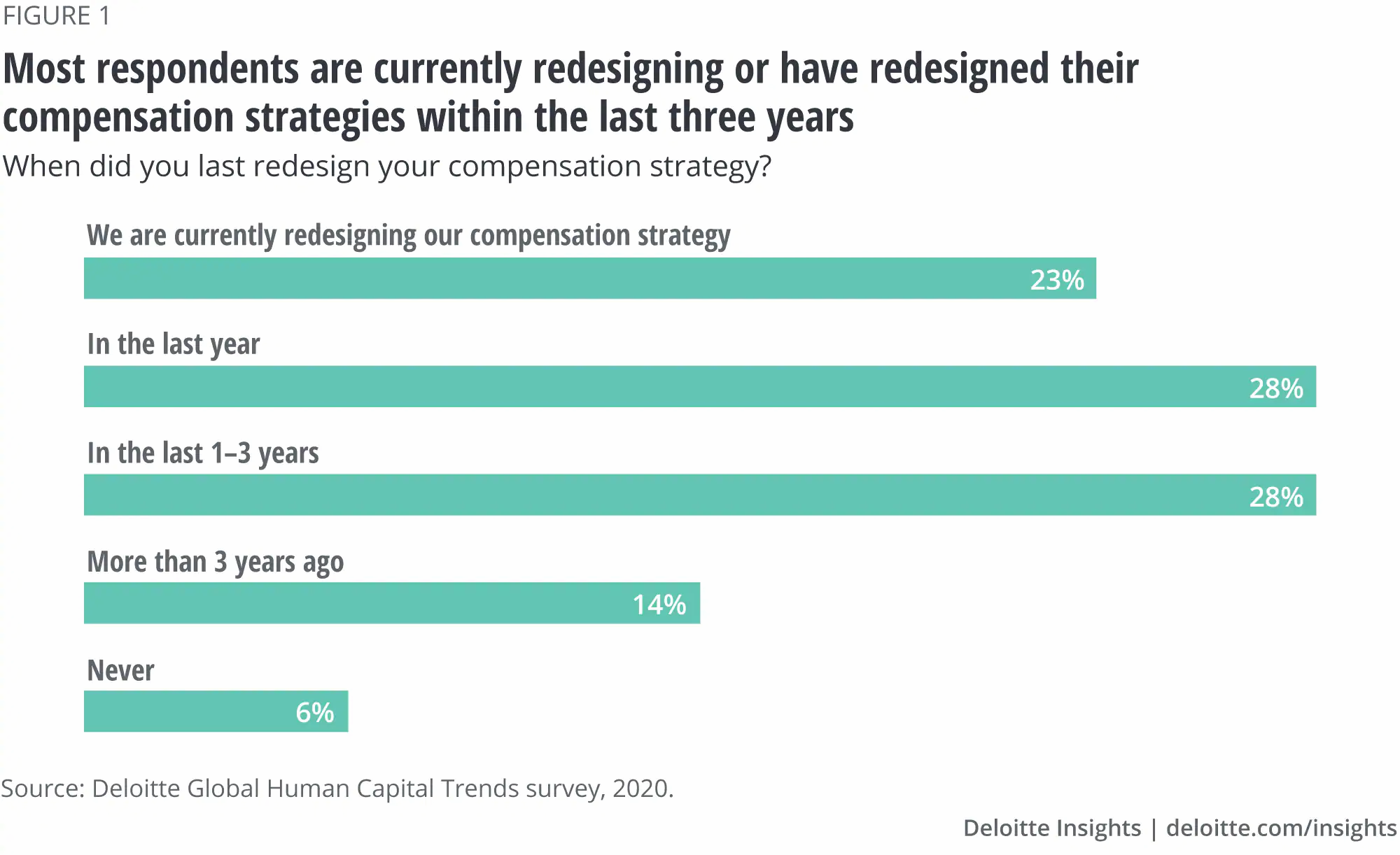
Many organizations seem curiously uncertain about how to approach this significant area of spend. In Deloitte’s 2020 Global Human Capital Trends survey, most respondents said that their organizations were either in the middle of redesigning compensation or had changed their compensation strategy within the last three years (see figure 1 – included).
64 percent of respondents expected their organizations to redesign compensation yet again either this year or in the next three years.
Can you rely on spreadsheets to manage your largest organizational expense and accept the potential risks including security, lack of auditability, version control, and formulaic errors? In addition, with 64% expected to change or redesign compensation programs, wouldn’t it be much easier if your compensation plan were managed in one centralized repository in a secure, web-based platform?
We recently put together a comprehensive whitepaper, “How to Best Manage a Complex Variable Compensation Program in the Financial Services Industry” that covers these significant issues that comp professionals encountering.
Learn more about how Compose by DecuSoft can help you:
Dramatically Improve Data Integrity
Save You Significant Time and Resources Required to Manage, Implement, and Plan Compensation Processes